INTERVIEW PREPARED BY: MIA MEDAKOVIC
PHOTOS: COURTESY OF THE PRIVATE ARCHIVE
Ms. Zhang Xianling is a distinguished Chinese artist, art educator, and Master of Fine Arts whose work and professional career bridge artistic creation, education, and international cultural exchange.
She serves as a Director of the Shandong Contemporary Chinese and Western Painting Academy and as an Art Advisor to the New Zealand Artists’ Alliance. She is also a member of the Foreign Cultural Exchange Committee of the China Association for Art Vocational Education, where she holds the positions of Senior Teacher and National Fine Arts Examination Examiner. Her professional affiliations further include the Shandong Artists Association, the Shandong Oil Painters Association, and the American Society of Portrait Artists. Throughout her career, Ms. Zhang has devoted herself passionately to both art education and the creation of oil paintings, achieving significant recognition in both fields. Her artistic practice reflects years of dedication, research, and a deep commitment to the language of painting.
Her works have been presented in numerous important exhibitions in China and internationally, receiving multiple awards and distinctions. Today, her paintings are held in private collections, continuing to resonate with audiences across cultures and geographical boundaries.
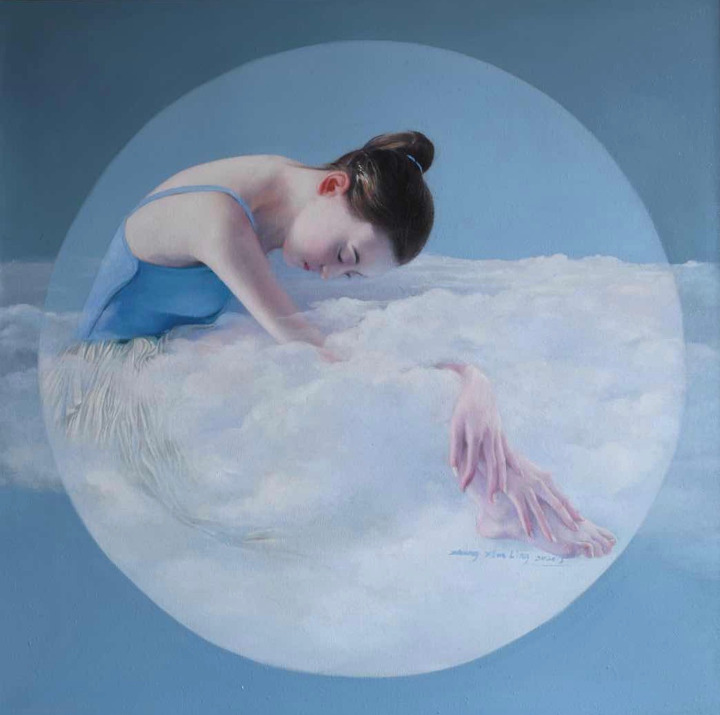
I believe that art is humanity’s only universal language.
It can transcend the barriers of geography, race, and culture, allowing souls scattered across different places to recognise one another, understand one another, and ultimately resonate with one another in harmony.
This, I believe, is the value of art and its true power. It is also the primary driving force behind my artistic creation.
For me, artistic creation is a lifelong journey. An artist must first develop a multifaceted understanding of the world and the environment in which we live, and gradually form an independent consciousness.
Only then can one search for appropriate paths and modes of expression through which invisible thoughts, perceptions, and states of consciousness may take visible form through artistic language.
For this reason, I strive to master different artistic languages and forms of expression—not to display technical virtuosity, but to search for the key that connects one human heart with another.
Through the unique language and possibilities of art, I attempt to slowly sort through the invisible, ambiguous, fragmented feelings, perceptions, and thoughts within me, transforming them into visible images that may resonate with viewers.
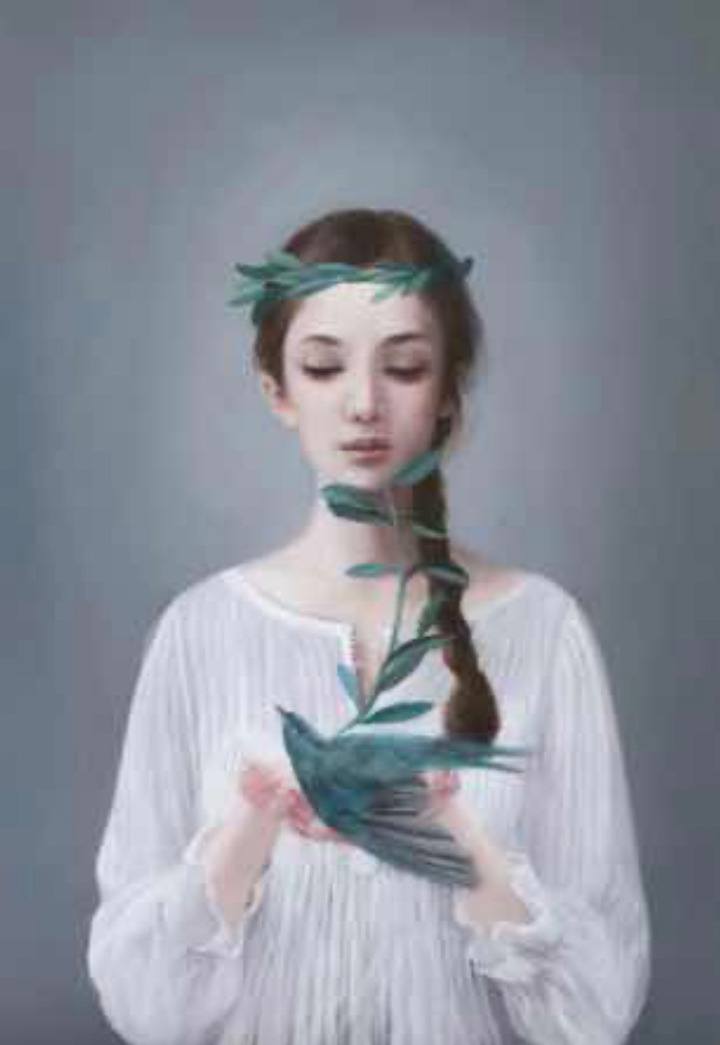
In the process of examining and organising an image, I encounter myself.
Through this dialogue with myself, I have learned how to adjust my state of mind and my way of being in life, gradually moving in the direction I hope to pursue.
I have also come to understand what art should be, and through continuous practice I have gradually found approaches and methods that are appropriate to me, allowing my work to fully express my thinking.
Therefore, my works are reflections of my life and my mind.
The birth of every work records a genuine emotional experience from a particular stage of my life.
I have also come to understand clearly that the task of an artist is to transcend geographical and cultural boundaries, allowing unfamiliar souls to meet sincerely through the bridge of art and communicate with one another.
Art enables us to engage in a silent dialogue of the spirit with the world, in our most authentic forms, and under its influence, to continue growing towards the light.
I hope art can return to its original mission: to heal the human heart and connect all living beings.
For me, therefore, artistic creation is not a momentary impulse. It is the necessity of giving external form to inner perception.
It is my way of seeing myself and connecting with others.
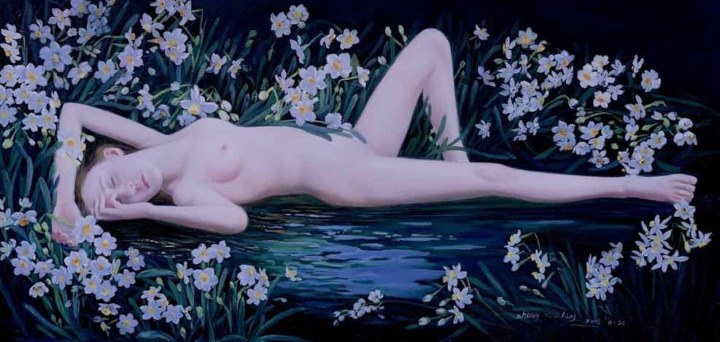
THE CREATIVE PROCESS
This understanding directly shapes my creative process.
I usually begin by following the needs of my inner world and conducting extensive research, collecting and organising visual materials.
Once the theme has been established, I consider the overall structure of the work—including its scale, proportions, materials, and composition.
Only when a clear and definite vision of the work has formed in my mind do I begin to paint.
During this process, I do not deliberately follow the actual appearance of the external world. Instead, I construct the image according to the established theme and my intuitive perception.
Technique, composition, form, and colour all begin with the theme of the work and my inner experience.
For this reason, although my paintings may appear realistic, the emotions and ideas they convey are often surreal.
I hope they invite reflection and open possibilities for imagining the future.
My inspiration does not arise simply from natural objects themselves. The objects of nature are merely vehicles through which I communicate ideas.
My inspiration comes more from the changing rhythms of the seasons, thoughts and understandings accumulated through the passage of time, and those experiences of life that are often difficult to express in words.
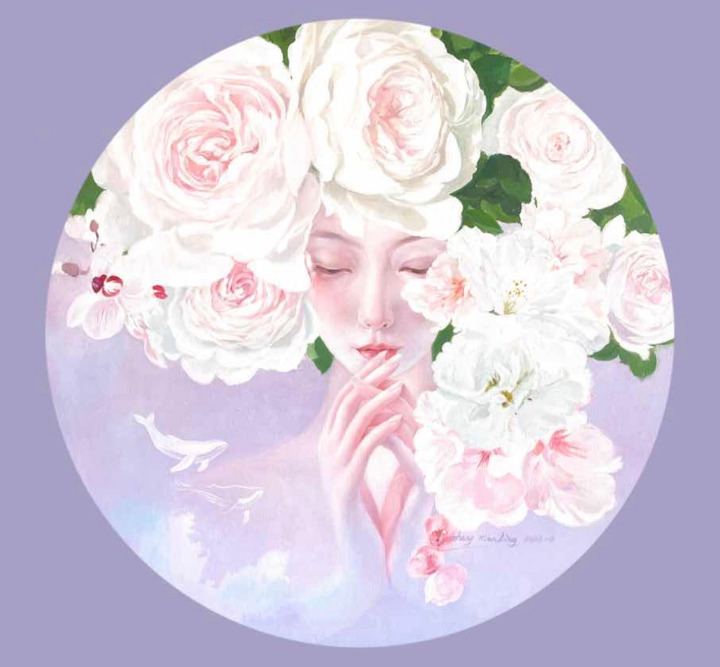
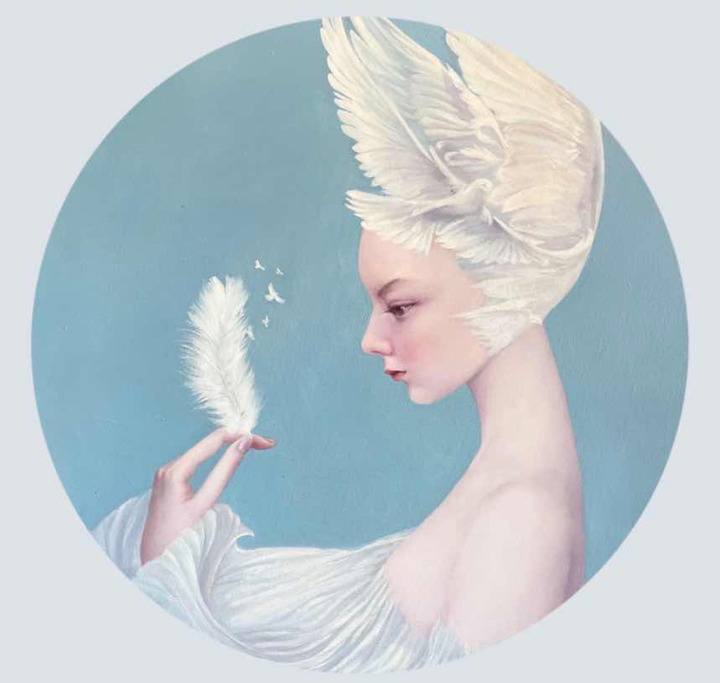
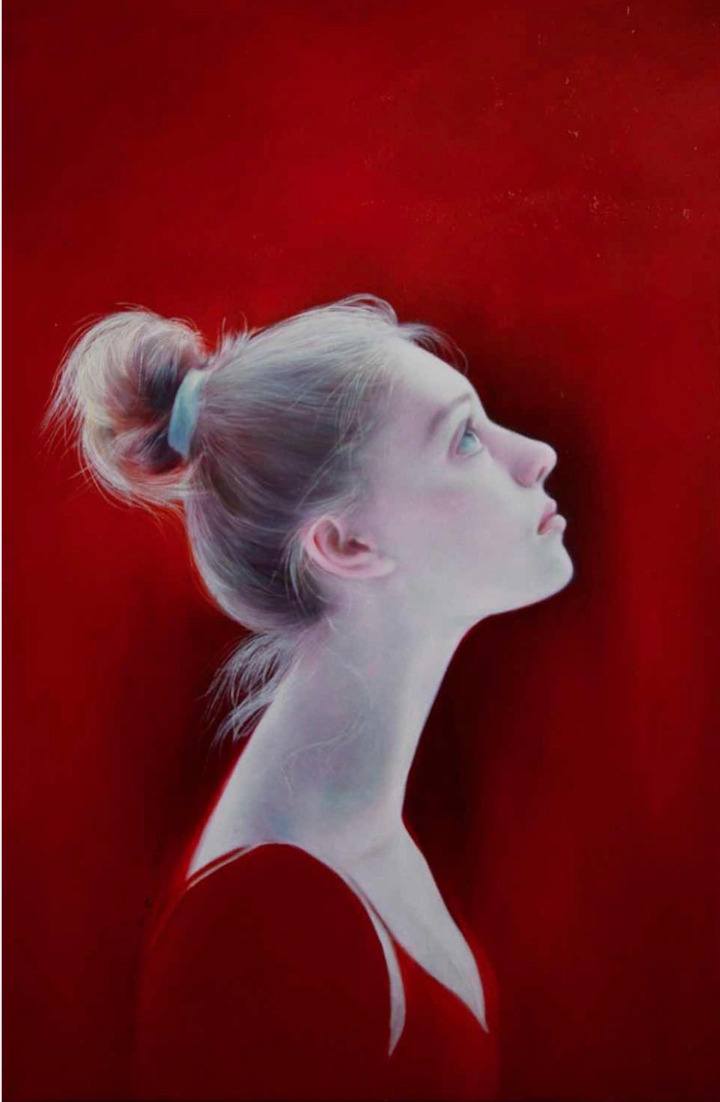
This philosophy of creation—using external things to express inner feeling—is perhaps most concentrated in one of my series of figurative works.
If I were to choose a group of works, or a particular state of mind, to represent my art, I would choose this series.
These works are projections of my inner world and external expressions of my artistic ideals.
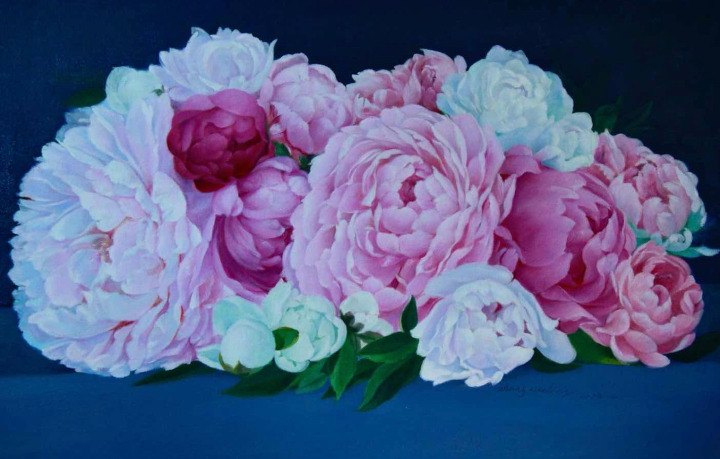
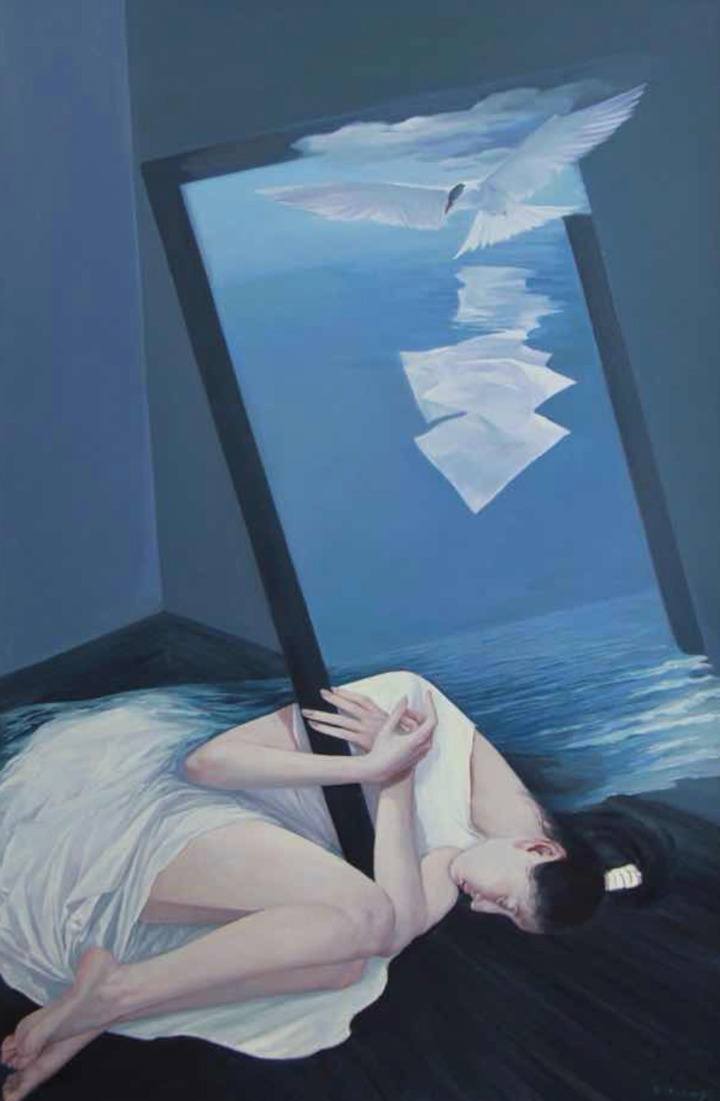
“What Night Is Tonight”
Zhang Xianling | Oil on Canvas | 100 × 180 cm
The girl dressed in white in this painting represents not only my emotional state when I first became a mother and entered society, but also the mentality of many people living within particular circumstances. Everyone may be able to see something of themselves in her and hear a call from deep within.
Through this painting, I hope to tell people that no matter when or where you are, even when your body is forced to crawl upon the ground of reality, and your hands and feet are bound by worldly expectations and the desire for recognition, your heart can still face towards a wider ocean of life. This work received an award at the Qingweile Graduation Exhibition. It also received the Outstanding Work Award at the 10th Shandong Provincial Arts and Culture Festival and was subsequently included in a provincial touring exhibition.
In addition, it received an Award of Excellence in the Realism and Hyperrealism Painting Competition organised by the Humpback Art Museum in the United States.
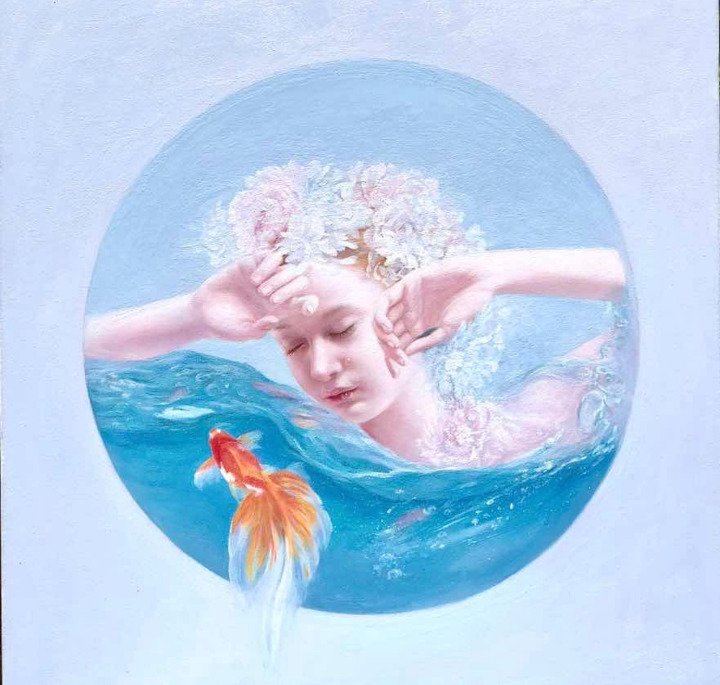
“Not a Fish”
Zhang Xianling
The girl floating and struggling upwards through the seawater is me, and she is also many others.
She represents those who move and struggle through multiple identities—as wives, mothers, and daughters—while continually searching for themselves and refusing to abandon that search. Even when life is difficult, one must struggle towards the surface, breathe freely, and eventually allow oneself to bloom. The fish, meanwhile, observes the girl beneath the water in its own way, perhaps wishing to enter her world. Yet the bitterness and sweetness of life, its warmth and coldness, are ultimately known only to those who experience them.
This reminds me of the dialogue between Zhuangzi and Huizi:
“You are not a fish. How do you know the joy of a fish?”
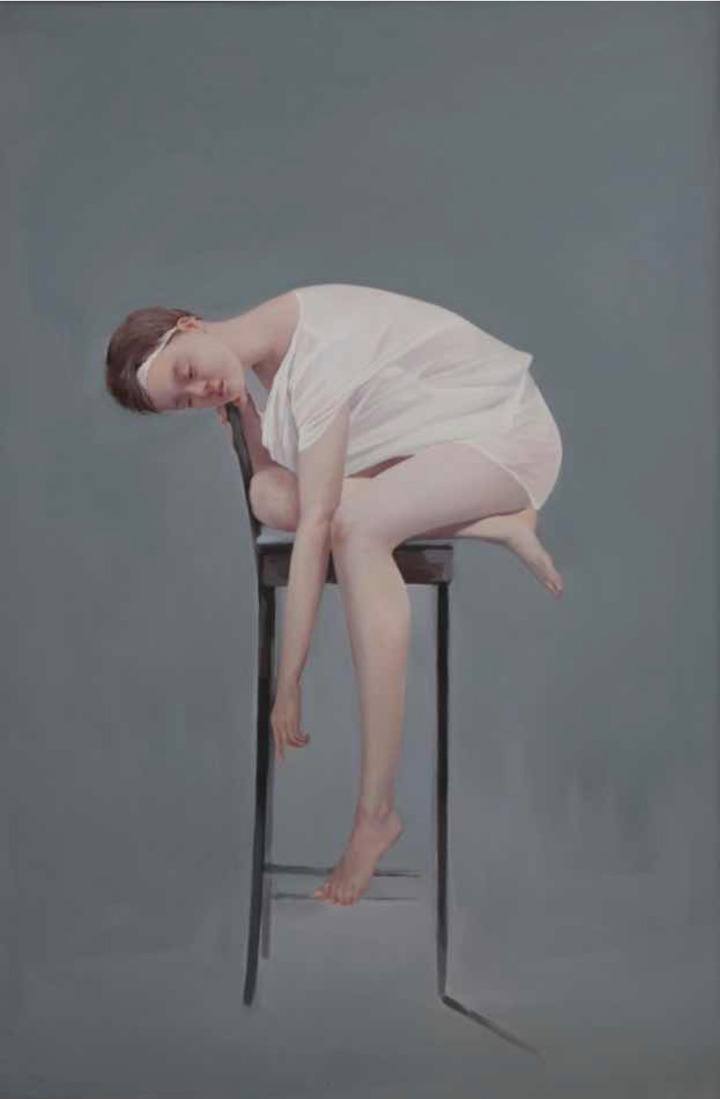
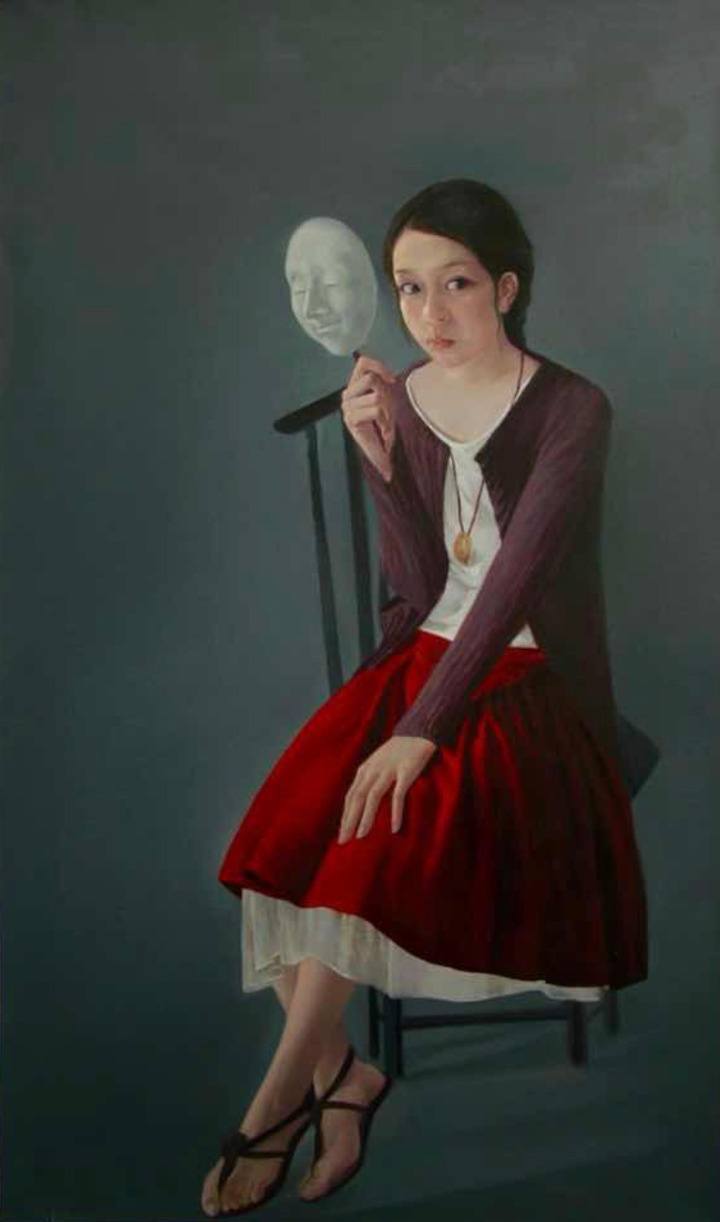
“The Chair”
Zhang Xianling
This girl seems to have found a place for herself, yet the space she occupies is too small—almost incapable of containing her. I used the elongated yet extremely slender legs of the chair to create a sense of instability and crisis.
The confined space makes the girl appear constrained and uncomfortable. Through this image, I wish to express a particular state of being: a person may appear to have obtained a good position in life and may therefore believe that they can simply settle down and live comfortably, drifting through life without questioning where they are. Yet if that position is not one you truly like—or if it even makes you uncomfortable—then stepping down from that chair requires courage.
“Remaining Landscapes”
Zhang Xianling
This work is entitled Remaining Landscapes.
The woman in the painting symbolises Mother Nature and culture. She appears beautiful yet sorrowful, reaching out in an attempt to save the blue-and-green landscape that has been polluted.
Behind her, smoke rises from factories, gradually eroding the image of A Thousand Pines on Ten Thousand Ravines, one of China’s renowned ancient paintings.
The blue-and-green landscape she attempts to save was also inspired by another celebrated masterpiece from the Song dynasty, A Thousand Li of Rivers and Mountains.
These works represent spiritual and cultural values.
My painting emerged from the pain I feel when observing acts in contemporary life that damage both nature and culture. Through this work, I also hope to call upon people not to neglect their responsibility towards nature and culture in the process of pursuing development.
True art should arise more from inner perception than from the superficial appearances captured by the eyes.
What truly moves the human heart is the consciousness that flows through an image. What art ultimately seeks is the externalisation of one’s inner nature and spirit. Materials and techniques are merely means. One’s original intention and inner purpose are the true destination of artistic creation. Much of this aesthetic understanding comes from my identification with the profound artistic and cultural traditions of China, as well as my understanding of different Western artistic movements.
However, I do not attach myself to any particular school, nor do I simply reproduce the formulas of ancient artists. What I inherit is the spiritual core of Chinese art—its emphasis on artistic conception, atmosphere, and the expression of the spirit. In a series of plein-air landscape paintings, I drew upon the brushwork of Chinese xieyi, or freehand painting, incorporating the expressive, calligraphic movement of the brush.
I deliberately reconstructed the structural space of buildings, softening the diagonal lines of their roofs so that whitewashed walls, dark tiles, and blue-grey skies could merge emotionally within the painting.
I pushed the noise and bustle of the human world into the distance, transforming it into scattered points of colour.
I reduced the saturation of the palette and used a technique resembling the textural dotting found in traditional Chinese painting to depict reflections on the water, creating an atmosphere of time passing and things gradually drifting away.
The paintings may contain a certain sense of surrealism, yet I have always believed that inner truth is far more important than the appearances perceived by the naked eye.
This series of works also carries all of my reflections on tradition, contemporaneity, and the possibility of spiritual communication between people.
TRADITION AND CONTEMPORARY ART
Respect and reverence for tradition do not mean mechanically reproducing ancient methods. Tradition can only grow into living contemporary art when it is reinterpreted and reactivated within the present. Human thought changes with the times. The pulse of an era, its spiritual core, and our immediate experiences are what contemporary art should truly pay attention to. For this reason, in my works created in Wuyuan, I deliberately moved beyond the traditional habit of pursuing literal accuracy in plein-air painting. Drawing upon Western ideas of flat composition and the colour sensibilities of Impressionism, I transformed real landscapes into expressions of inner states.
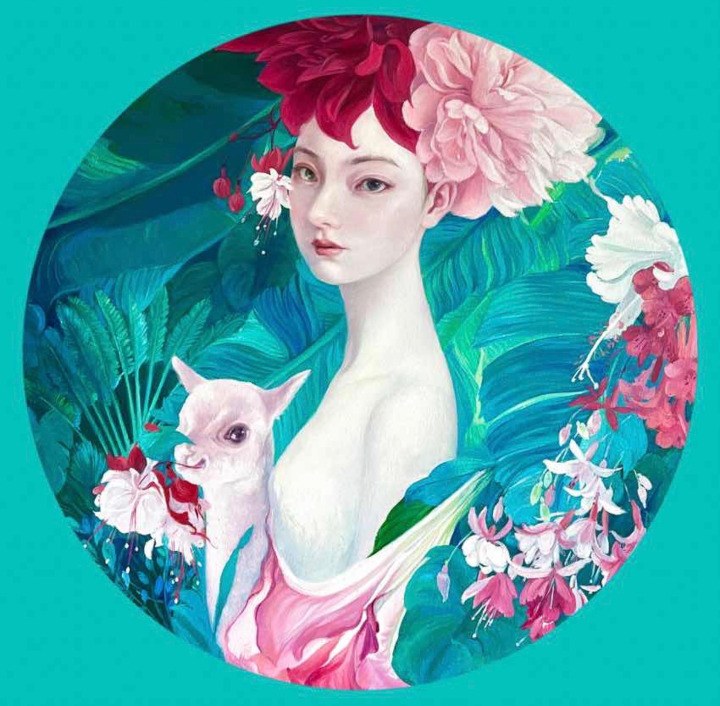
“The Green of the Banana Leaves”
Zhang Xianling | Oil on Canvas | 60 × 60 cm
Art fears stagnation above all else.
If one rigidly clings to established techniques and modes of thinking, it is easy to fall into rigidity and conventionality. For this reason, I am willing to embrace change and continually reshape myself. I draw nourishment from both Chinese and Western art, adjusting my modes of expression as my inner state changes. I remain faithful to my own inner nature and continue searching for resonance between human souls. For me personally, this means spiritual freedom within art. In the real world, differences in history, geography, and culture inevitably create barriers between different countries and peoples.
Yet humanity’s longing for happiness, peace, and beauty is universal.
I have always believed that art possesses the power to transcend culture and connect human hearts.
Even when viewers do not understand the cultural background of the East, they can still perceive the ideas communicated through the unique forms and languages of art and experience a spiritual resonance that crosses mountains and seas. This form of cross-cultural empathy is part of the universal humanistic foundation of art.
Although European art and Chinese art differ greatly in materials and outward appearance, their spiritual cores share something fundamental. Both pursue beauty, seek sincere expression, and celebrate life. The encounter between Chinese and Western art is not a matter of choosing one over the other. It is an encounter of mutual inclusion and enrichment—of learning from one another and achieving something together. I also hope that my work can bring viewers a small moment of peace amid the noise and confusion of the world, allowing them to perceive the original state of life beneath its outward appearances.
A MESSAGE TO THE FUTURE
If I were to send a message to the future through art, it would be this:
The enduring vitality of art does not lie in how elaborate or sophisticated its techniques may be. It lies in the truth of the human heart and in the empathy that exists between people.
Times will continue to change, and aesthetic values will continue to evolve Yet sincerity alone can transcend time and space and offer comfort to the human heart. Of course, my exploration has not yet reached its destination. I hope to further strip away the visible traces of technique and allow the inner spirit to flow more naturally—to turn inward and continue my dialogue with myself, while turning outward and connecting with all beings in the world. I will continue searching for a more universal artistic language through which art may fulfill its mission of connecting human hearts through shared perception and emotional resonance.
May art become an echo capable of crossing the barriers between souls.