TEXT AND PHOTOS: ANNA SERRANO
Along the steep slopes and the coming and going of antique dealers in the Çukurcuma neighbourhood, down Faik Paşa street, named in honour of the Italian Francesco Della Suda, pharmacist and Ottoman pasha, a three storey façade guards a secret courtyard and rooms overflowing with treasures. This is the art and antiques gallery A la Turca House: a free zone where the hustle of Istanbul surrenders helpless before beauty and calm.
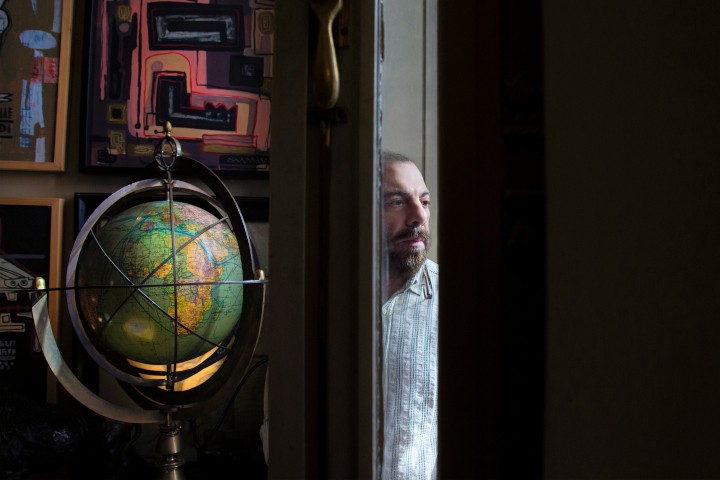
The legendary Erkal Aksoy stands at the helm of this bastion, preserving and passing on a unique way of understanding existence, applying Dostoevsky’s maxim ‘Beauty will save the world’ to his own life with both discipline and poetry.
The door opener
An exquisitely mannered host, he welcomes everyone to his door with true Turkish hospitality, greeting guests with a warm smile, traditional kurabiye pastries, freshly brewed tea, aromatic coffee, artisanal cheeses, dates, and local delicacies. Mr. Erkal is no ordinary antique dealer. He is a navigator of memory, a diplomat, an art dealer, a patron, who has spent his life restoring what was seemingly broken. He builds invisible bridges between the elegance of the Ottomans, the modern cosmopolitan style, and the deep earthy roots of Anatolia, connecting East and West much like Kintsugi, the Japanese technique that repairs cracks with gold rather than hiding them.
As Kavafis advised in his poem Ithaka: „Stop at Phoenician trading posts / and buy fine merchandise / mother of pearl and coral, amber and ebony / and sensual perfume of every kind.“ Such is the universe of A la Turca House. Crossing the threshold brings the certainty of entering a magical realm, like Alice stepping through the mirror. Because Mr. Erkal is many things, but above all, he is a ‘door opener’.
Alice in Wonderland
In the days of the Ottoman Empire, high dignitaries were received after passing through the Sublime Porte (Bâb-ı Âli). Today, another extraordinary door exists at number 4 Faik Paşa. Erkal Aksoy: a kilim rugs collector, an antique dealer, a former hotelier, a contemporary art curator, born to a Georgian father with roots in the Ottoman Empire and an Anatolian mother. He was born in Istanbul, grew up here, and remains bound by its spell with an almost physical devotion: ‘I cannot stay away from this city for more than a week’ he confesses with a mix of pride and resignation.
Love at first sight
Thirty years ago, when Çukurcuma was merely a decaying and forgotten labyrinth, far from the cosmopolitan pulse that defines it today, Mr. Erkal arrived searching for a corner to give shape to his dream. He started with a small space in the heart of the neighbourhood, but the cramped quarters constrained his vision. ‘I wanted a garden…’ where stone and shade could converse. Love at first sight as he puts it: ‘…the building chose me a bit, and I chose it.’
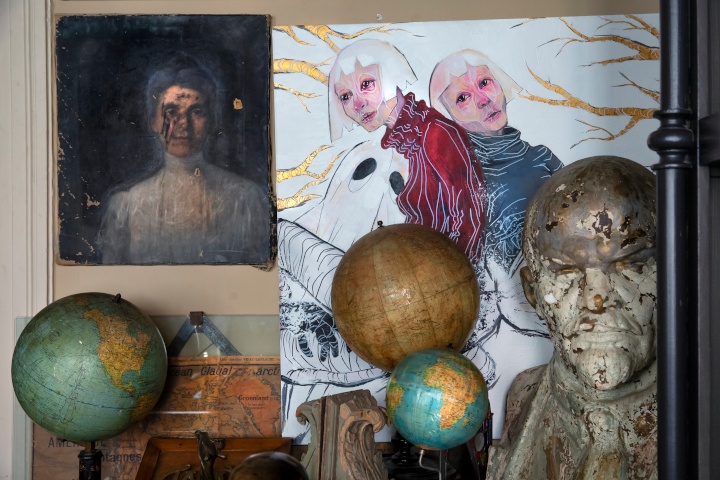
The Eclectic Universe in the Depths of Çukurcuma
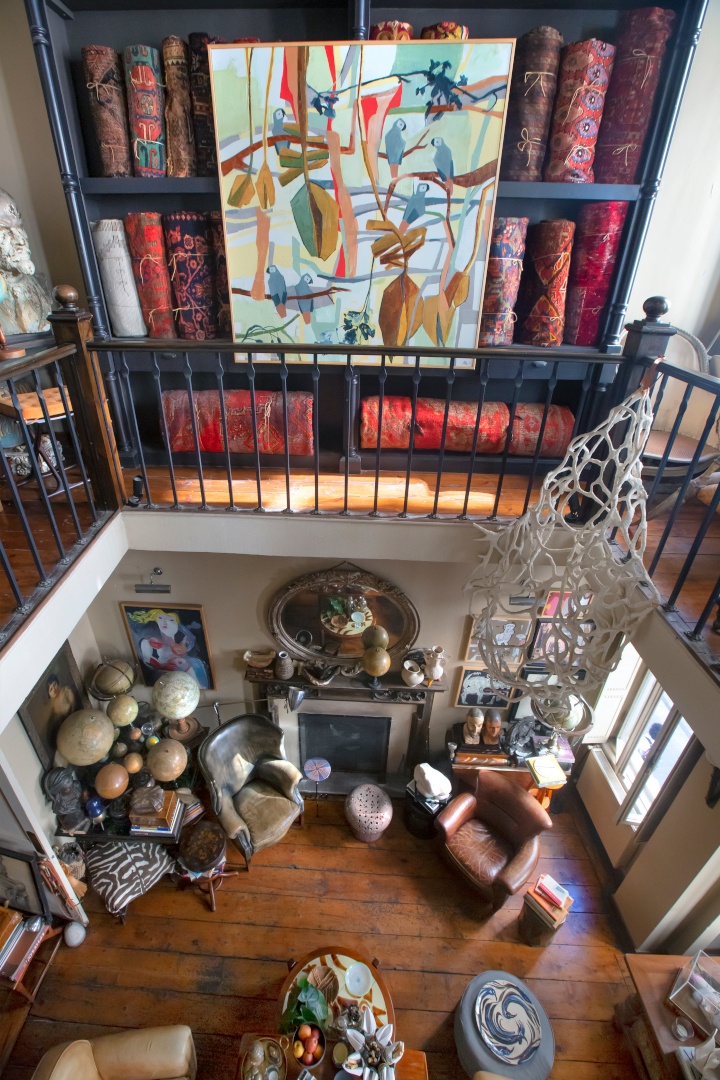
The building underwent a year and a half restoration. In an act of pure audacity, he decided to remove the floor of the top level. He sacrificed usable walking space for monumental height, allowing streams of light to bathe the interior and create a chiaroscuro atmosphere.
It was there where he began to unfold his vision: fostering a harmonious dialogue between the Ottoman history and the emerging Turkish and international talents. Everything stands in the right place, everything exists in a calculated dance.
The Dance of Objects
On the ground floor, the antique kilim rugs. Woven on the looms of Konya or Sivas, their natural dyes and ancient geometries burst into a polyphony of colour that defies the passage of centuries. Mr. Erkal’s romance with wool began when he was sixteen in Bodrum, on the Aegean coast, when he acquired a piece of an antique fabric that he still keeps so as not to forget.
His passion led him years later to the Turkish edition of the prestigious Hali magazine, a Sotheby’s publication, which he edited for over a decade. During this time, he traveled through the most remote corners of the country running after sacred pieces.
For Mr. Erkal, the kilim holds a pure form of art and a secret language. ‘Village women expressed themselves through the loom,’ he recalls. ‘If they were in love, they would hide a rolling paper between the threads. If they wove the silhouette of a teapot, they were announcing a pregnancy.’
That same focus on detail shapes every other room, where each corner reflects a seamless synthesis. It is a true blend, Mr. Erkal explains with an alchemist’s precision. Bringing such different elements together takes work, as Ottoman pieces, items from the seventies, and contemporary art originate from completely separate worlds. When I buy something, selling it never crosses my mind. I picture how it fits into the broader space. If an object catches my eye, I immediately imagine what I will pair it with so the pieces can speak to each other.
The past is still protected and cradled by oil portraits from the late Ottoman period, cabinets adorned with églomisé calligraphy, and Kütahya ceramics. And in the basement, among bare stone walls and an almost liturgical half light, cobalt urns from Anatolia, Aegean water vessels with metallic sheen, clay jars, and medallions rescued from old mosques.
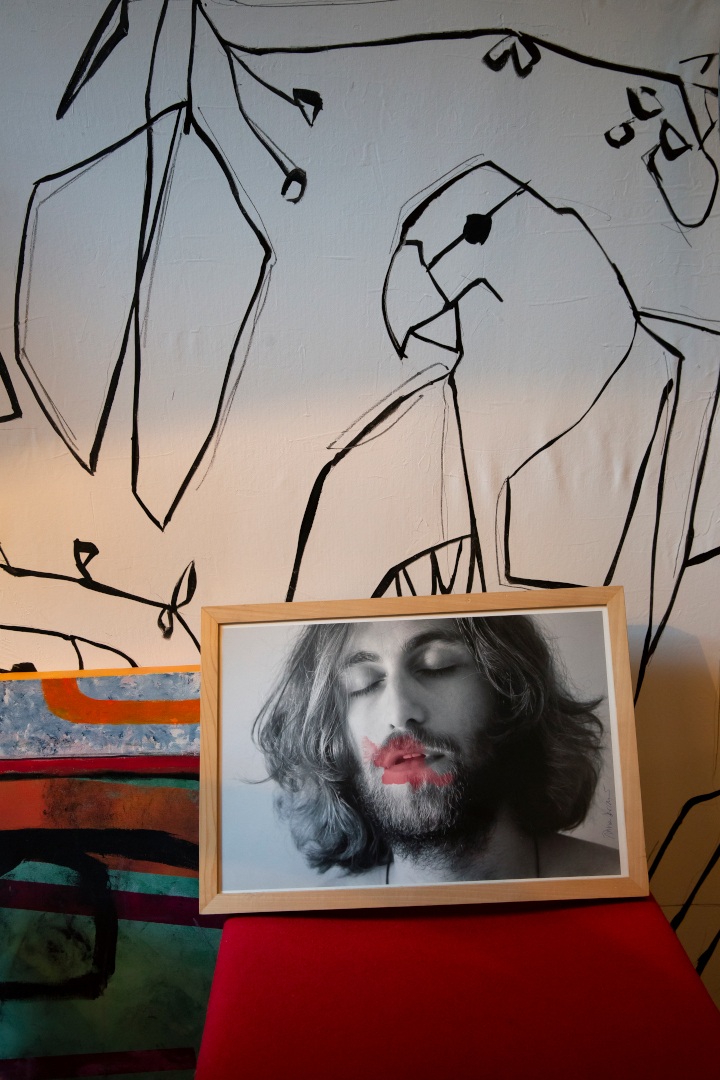
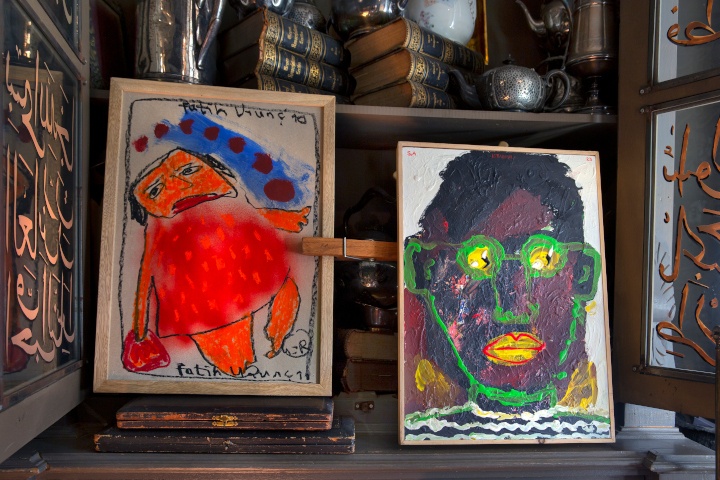
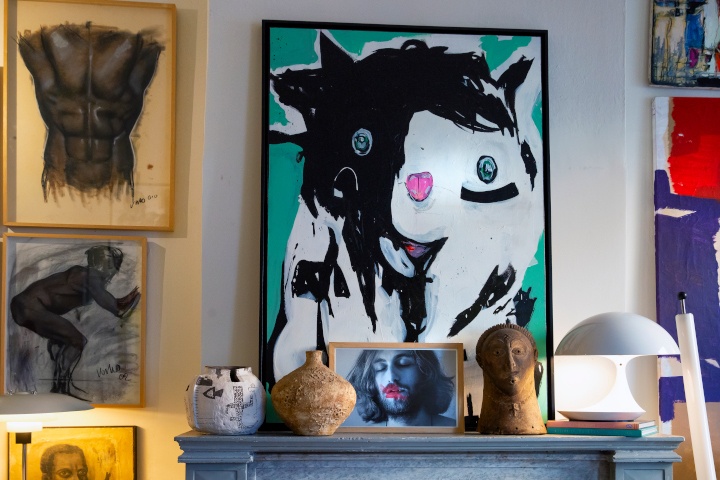
Yet A la Turca is also the home of modern art, Turkish above all, but international as well. It is the place where nowadays artists find refuge. Contemporary art is everywhere. So much so that, to exhibit even more works, he has acquired a new space a few steps away and named it A la Turca Modern.
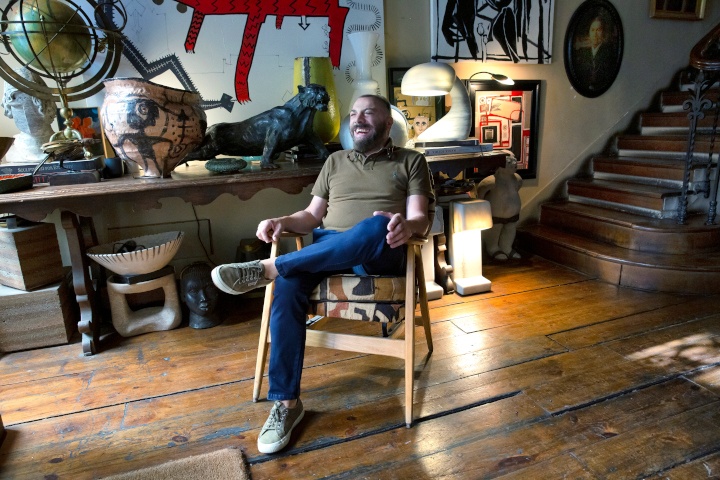
Serkan, the flawless assistant
Behind this architecture of objects stands his loyal assistant Serkan, a sort of Turkish Batman butler. An equally exquisite man who, from the quiet background, keeps the gallery machinery running.
Their bond goes far beyond a simple working relationship after more than twenty years side by side. ‘I know three generations of his family,’ Mr. Erkal notes, recalling the days when Serkan’s father and uncles washed and repaired his rugs.
Stepping into this refuge of gentle souls is a true privilege.
The collector
I first came to A la Turca House in 2007, alone, stepping out on my own for a few hours from the official schedule of a press trip. I have kept coming back ever since, and these days, if I take too long to return, Mr. Erkal scolds me for it. Three pieces of my own hang among these walls chosen by a man who chooses everything with the same care.
In an age dominated by haste, obsolescence, and voracious consumption, A la Turca House is a declaration of silent resistance. Here fireplaces are lit in winter, tea is served unhurried, and leisurely conversations stretch on without a glance at the clock.
‘This profession is a terrible passion. All these objects are like my children. I do not forget anything I buy. It is hard for me to choose, but when I acquire something, it is almost impossible for me to part with it. Sometimes I take it home for five or ten years. I contemplate it, live with it, enjoy it. But there are pieces I will never be able to part with.’
The Bosphorus and the map of memory
Istanbul changes, accelerates, and becomes concrete at a rapid pace. Yet for Mr. Erkal, the essence of the city remains unchanged: ‘when I think of Istanbul, I think of the Bosphorus. It is what I love most. There are still small untouched redoubts, corners where nature and history have not been devastated. When I go out for breakfast or a walk, I always look for those places.’
For anyone arriving in the city searching for its authentic soul, Mr. Erkal is clear: ‘start with the museums, of course. The new ‘Istanbul Modern’ by Renzo Piano is an architectural wonder that gives an incredible energy to the city. But if you want to feel the real Istanbul you have to get lost in its neighbourhoods: Balat, Sarıyer, Kuzguncuk, the Princes’ Islands… Streets that still keep their memory and their dignity despite everything.’
The storyteller
A la Turca House is a refuge, and a living cultural platform beating in the very heart of Istanbul. ‘I do not consider myself a simple antikacı (antiquarian). I feel like a storyteller, a promoter, and an ambassador trying to build a bridge between past and future, between East and West. I want to leave a clean trace for new generations. To remind them that the old is not dead, but the sacred root of everything to come.’ Mr. Erkal: one of the silent guardians of Istanbul.