WORDS: MIA MEDAKOVIC
INTERVIEW: SUZANA JELOVEČKI
PHOTOS: RENATA SEDLAR VIDEOMIX, JAŠA JAREC I TINA LEE ODINSKY ZEC
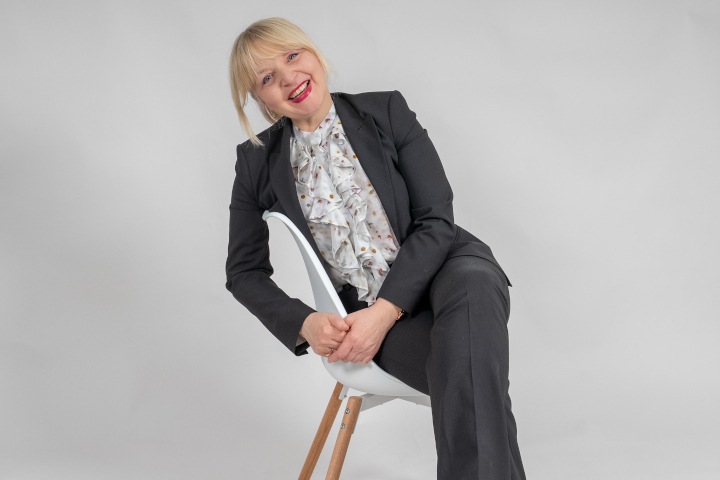
Suzana Jelovečki was born and raised in Zagreb. She graduated from the Classical Gymnasium and later studied Croatian language and literature. For several years she worked as a teacher of Croatian language and literature before moving to the United States at the end of the 1990s, where she spent nearly two decades.
In New York City she earned a Master of Science degree in Acupuncture while also being a full-time mother. She began her independent clinical work in Chinese medicine in Ithaca, New York, where she opened her private practice Nature Bound Woman. Alongside her practice, she volunteered as an acupuncturist at Ithaca Free Clinic, collaborated with Ithaca Primary Care, worked as an associate practitioner at Rasa Wellness Center, and held educational talks in the local community on acupressure and dietary therapy.
Suzana has continued her studies under the guidance of Dr. Jeffrey C. Yuen, the program director of her formal training and one of the leading teachers of classical Chinese medicine in the West. In her clinical work she combines acupuncture, dietary therapy within the framework of Chinese medicine, and aromatherapy. In 2017 she returned to her hometown of Zagreb, where she founded her micro-practice Akupunktura Zagreb, where she continues to work today. She enjoys cooking, dancing, and gardening. But living in the countryside, she spends much of her time in nature, which she considers an essential part of her personal balance. She especially treasures time spent with her grown and independent children.
Your professional journey began in the world of Yugoslavian and Croatian literature but eventually led you to acupuncture and Chinese medicine. Where do these two worlds meet — in language, the body, or in the understanding of the human being?
During my high school years I was seriously preparing to study medicine or biology, particularly ecology. Yet something was missing for me — the element of emotion and spirit, something that the body carries but which is not immediately visible, and yet deeply influences the whole human being. Studying literature became a refuge for the part of me that listens to people and their inner worlds. Later, encountering Chinese medicine has united my curiosity for research with my need to view human life holistically — to understand how the world around us and within us shapes both the challenges and the beauty we experience in life. In Chinese medicine there are no absolutes said my teacher. The verse by Rainer Maria Rilke — “I live my life in widening circles” — perhaps poetically describes the unwritten agreement between a therapist of Chinese medicine and the medicine itself.
What first drew you to acupuncture and Eastern medical traditions?
My first encounter with Chinese medicine happened when my two-year-old daughter suffered from recurring respiratory problems. She was helped by one of the most respected acupuncturists in New York City at the time, specialized in women’s and children’s care, Rachel Koenig. She recognized my holistic worldview and suggested that I enroll in the acupuncture program whose director was Dr. Jeffrey Yuen. That suggestion marked the beginning of a completely new chapter in my life — both personally and academically.
You studied and lived between the United States and Croatia. How did those cultural and educational experiences shape your approach to healing and working with clients?
The United States is truly my second home. I have lived there actively for almost twenty years, built my family life, completed academic education, and worked professionally as an acupuncturist. It may sound like a cliché, but in New York City almost anything felt possible — including studying within a program that did not exist anywhere else in the world at the academic level. Dr. Yuen generously shared and is sharing deep and multilayered knowledge of Classical Chinese medicine with all of us around the world who chose that path of study.
Professional clarity and clear boundaries create safety and trust in therapeutic work. In that sense, I miss the United States on daily basis. American clients had been generally more aware and, I would say, more pragmatic when approaching alternative or complementary medicine. They understand that healing is a collaborative process between client and practitioner, and that the therapist has not been some sort of mystical authority.
In this region, it seems to me that alternative medicine was for a long time surrounded by an aura of miracle cures and mysticism. Many people have sought immediate healing or ad hoc solution while sometimes rejecting the validity of conventional medical care. Fortunately, in recent years awareness in Croatia about complementary approaches has improved significantly.
What my multicultural and transcontinental therapeutic experience has shown me most clearly is that beneath the surface we are all very similar. We all experience pain, illness, emotional turbulence, and vulnerability. Pain has been a universal human experience, and illness often appears as a reminder that something in our lives may need to change.
How do Western medicine and Eastern medicine “speak” to one another?
In the modern world, nothing replaces medical care. Acupuncture — and in some countries herbal medicine — functions primarily as a complementary approach alongside Western medicine. More and more physicians today practice what is known as medical acupuncture, in which specific sets of acupuncture points are used for particular diagnoses or symptoms. These standardized point protocols can also be more easily to some degree integrated into scientific research. Interestingly, many ideas that are now widely discussed in modern medicine have existed in Chinese medicine for centuries. Take the circadian rhythm, for example — something Chinese medicine described more than two thousand years ago through the meridian system. Western medicine explains it through endocrine and neurological activity.
Similarly, modern discussions about the microbiome and gastrointestinal health echo insights from many Chinese medicine schools of thinking. Li Dong Yuan, a renowned physician from the 12th century and founder of the Earth Element School wrote about how diet and suppressed emotions influence digestive health (so called internal pathogenic factors within context of Chinese medicine). His herbal formulas remain among the most widely used for treatments gastrointestinal issues in traditional Chinese medicine even today!
Acupuncture is often perceived as an “alternative.” Do you see it as a complement to modern medicine or as a complete system in itself?
Within the Western medical framework acupuncture functions primarily as a complementary method because nothing officially replaces medical care.
However, within the context of Chinese medicine itself, acupuncture represents a complete and coherent system of knowledge — particularly when all meridian systems are used. In that sense, I also see it as a powerful tool for my personal cultivation and self-care and as gentle invitation to clients to understand how acupuncture treatment fits into integrative health care.

Working with the body’s energy requires a subtle ability to listen. What has this taught you about human nature?
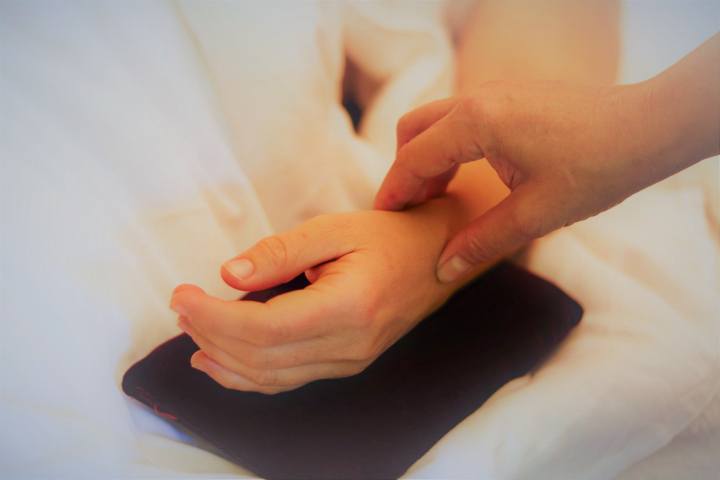
Human nature is extraordinary. Whether we speak of physiology in biomedical terms or meridians in Chinese medicine, both describe an incredibly complex and intelligent living system. The body is our only true home, yet modern people rarely visit it — even though it is. constantly with them. In Chinese medicine, the most refined form of “listening” occurs through pulse diagnosis. By gently feeling the pulse at the wrist, the practitioner can gain insight into how a person lives, what they feel, and where energetic imbalances or blockages may exist. Through careful and attentive touch, guided by Chinese medicine theories we are getting information on how energy travels through meridians in order to set possible treatment strategies to help client. I truly believe that nothing can replace human touch. One heart “listens” another. Listening to the rhythm of life is, for me, the most sacred aspect of therapeutic work.
Even after twenty years of intensive practice, I still feel deep respect, humility, and gratitude each time a client entrusts me with the story of their body, emotions, and spirit.
In today’s fast-paced world of constant stress, what are the most common issues people come to you with?
The most common concerns are neuro vegetative imbalances — a broad category that includes symptoms such as digestive issues, gynecological problems, anxiety, chronic fatigue, and burnout to name a few. Our endocrine and nervous systems are constantly trying to adapt to the accelerated rhythm of modern life shaped by technological advancement and the pressures of contemporary society. Sometimes what people need most is a change of direction or perspective. Acupuncture helps activate the body’s creative and regenerative energy — not only physically, but mentally and emotionally as well.

You seem to live the philosophy you practice. You have a garden, a life close to nature, and your acupuncture practice in Zagreb. What advice would you give modern people seeking balance?
In my work I am often in very intense and intimate therapeutic contact with clients. For that reason, my garden and time spent in nature are my own form of therapy. And I truly enjoy it! I spend time with my animals, plants, soil, and the natural elements. Growing my own vegetables brings me particular joy. To stay balanced I choose physical activities and creative work that quiet the constant noise of the mind. When you are digging in the soil, you simply are. Very quickly, worries and restless thoughts disappear. Modern people need to reconnect with their bodies, practice compassion and gratitude, think less and act more. When you are engaged in creation, there is little space left for reaction.
You were initiated by North American Indigenous communities. How did that experience shape you?
During my time in Ithaca I volunteered in a clinic serving socially vulnerable groups, including Native American clients. One of those clients was a medicine man who became my mentor and friend. Within Indigenous traditions there has been deep respect for both warriors and healers — soldiers, doctors, nurses, acupuncturists, and others who protect and care for the health of the community. Service to the community has been seen as a selfless act. Helping others has been considered an innate quality rather than simply a learned skill. In that spirit I was initiated. There was nothing grandiose or theatrical about it — certainly nothing resembling a “New Age” performance for the ego.
My life path has been intense, both personally and professionally. Yet I feel there is a strength and courage within me that allows me to accept life as it is. I tend to act quietly, listening to the rhythm of the Earth and the human heart — observing, respecting, and simply living life in all its colors with compassion for every living being on this planet. Ceremonies may sometimes touch other dimensions of existence, but the greatest expression of spirituality to me lies in how we live our everyday lives.

You are organizing a possible visit from your teacher, Dr. Jeffrey Yuen, to Opatija in May 2027. What could participants expect?
It would be a great honor to host Dr. Yuen. Dr. Yuen is one of the most sought-after lecturers on Chinese medicine in the Western world and my teacher. With his remarkable and erudite knowledge of classical Chinese medical texts, he guides audiences back to the very origins of Chinese medicine and philosophy, offering insights that illuminate modern theoretical concepts and practice of Chinese medicine. The tentative plan has been a two-day seminar which would begin with an exploration of how Daoist philosophy shaped the foundational theories of Chinese medicine. The second part will focus on aromatherapy for emotional balance within the framework of Chinese medicine. Dr. Yuen has also been a pioneer in applying essential oils to acupuncture points, and he would possibly share some of his knowledge with participants in our region. I am excited about creating a multicultural and multinational gathering united by a shared passion for beauty and vastness of Chinese medicine. Let´s see how this new chapter unfolds.
The theme of the March issue of RYL Magazine is “My New Era.” Have you already stepped into yours?
For me, life wisdom in this time of my life is to know both my strengths and fragilities. I am aiming to build honest and open communication, and have been drawn motivation to act and create from interactions that contribute to a kinder world. My new era will be an era of interconnectedness — and of meaningful relationships.