WORDS: MIA MEDAKOVIĆ
INTERVIEW: MARIA COMAN
PHOTOS: RALUCA MALNASI
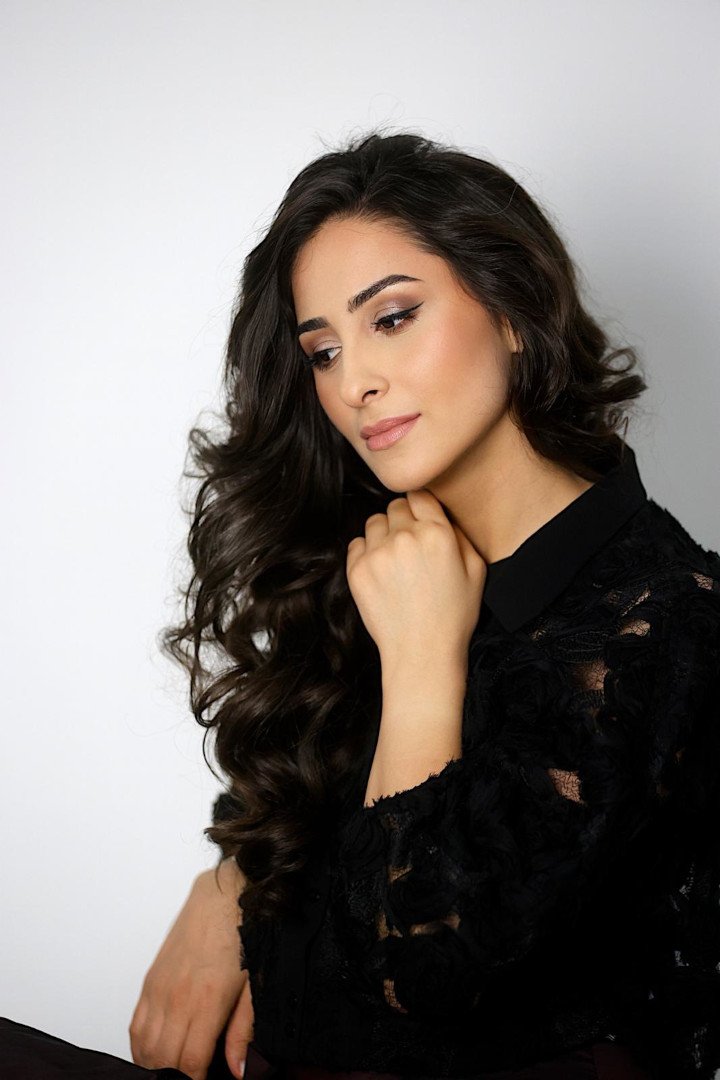
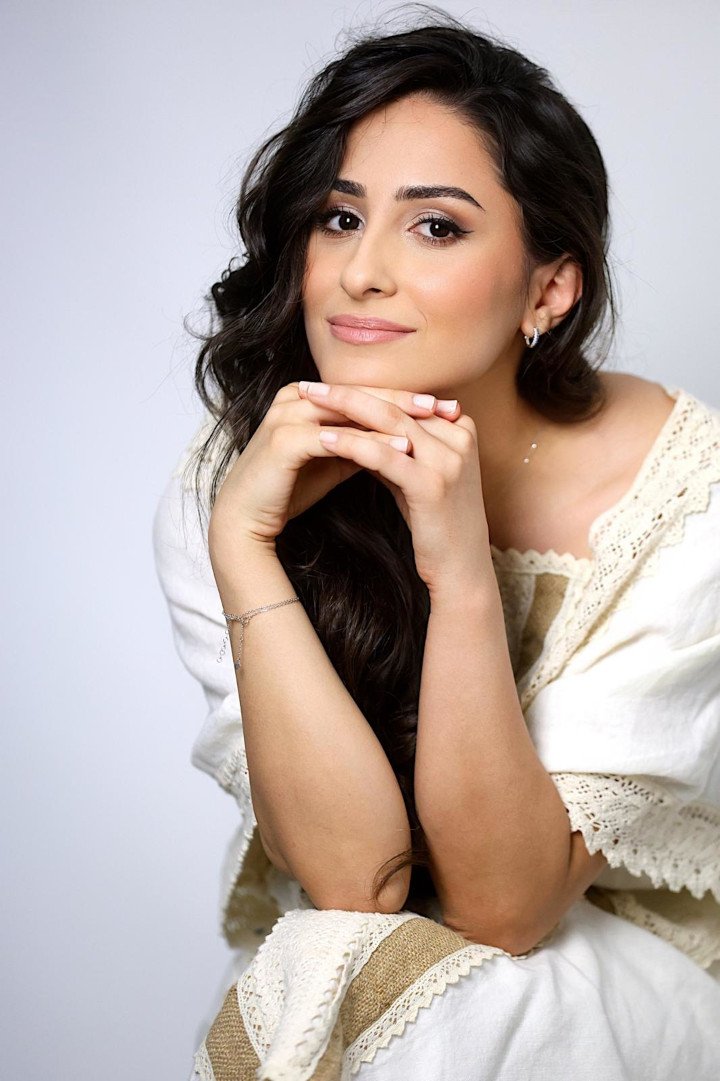
There are voices that are trained, and there are voices that seem to carry something beyond technique. Maria Coman belongs to the latter.
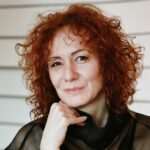
A Romanian singer, Byzantine and psaltic music performer, journalist, composer, lyricist, translator and conference interpreter, Maria has built an unusual artistic path at the intersection of music, spirituality, language and culture. Born in Pitești in 1991, she grew up in a family where faith, education and love were central values — foundations that would later shape both her life and her artistic expression.
Her education reflects the same multidimensional curiosity. She graduated from the Faculty of Letters and Arts in Sibiu and continued her studies in conference interpreting, security and diplomacy. Before finding her distinctive voice in Byzantine music, Maria explored journalism, jazz and pop, television and international communication. Her artistic journey was not a straight line, but rather a process of discovering what was already present within her.
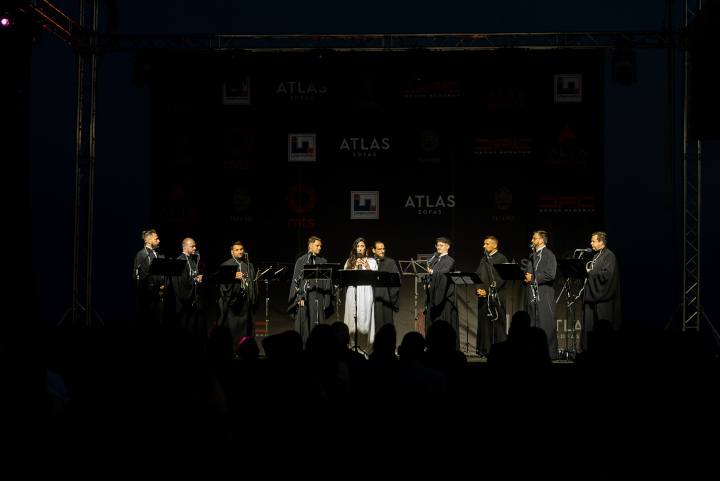
Byzantine music had been part of her life since childhood, but it was only later that she recognised it as her true artistic language. Today, she is one of the prominent voices bringing Byzantine and psaltic music to contemporary audiences, performing in Romanian and Greek and, on occasion, incorporating other Balkan languages and traditions into her work.
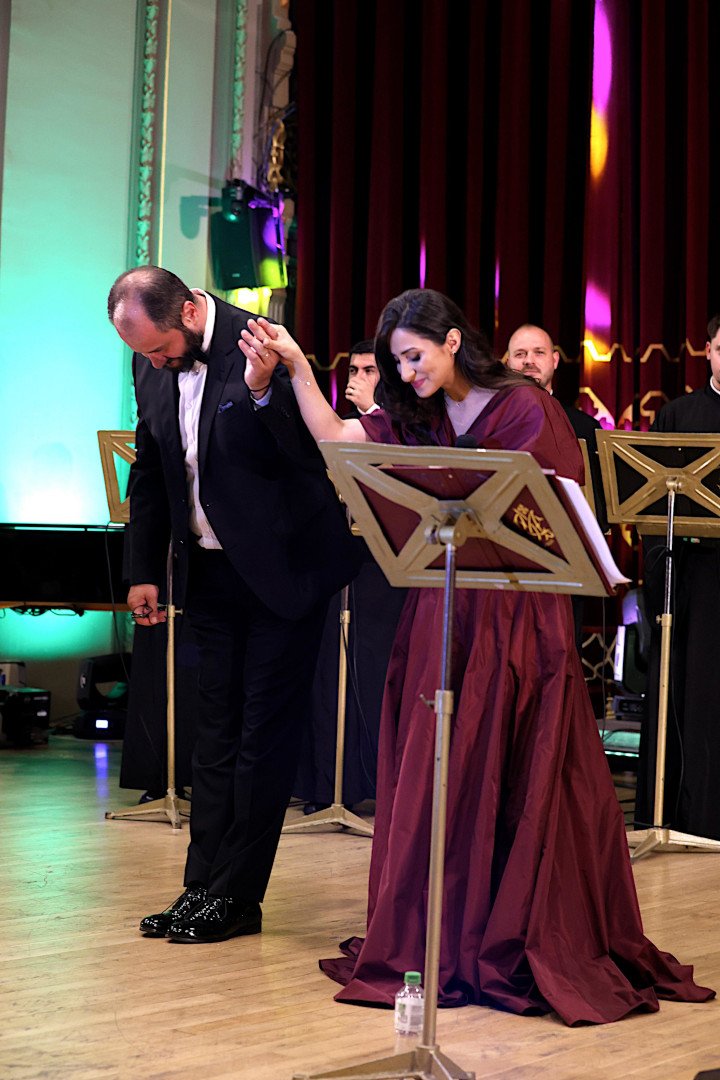
Her performances have taken her to some of Romania and Europe’s most distinguished cultural spaces. She has appeared at the Romanian Athenaeum, the Pitești Philharmonic and the National Arena, while international performances include the Wiener Musikverein, where she appeared as a guest soloist alongside the Romanian National Opera Orchestra and Choir and the legendary Romanian musician Gheorghe Zamfir. In 2024, her artistic journey continued onto the international stage, including performances connected with the Romanian National Opera in Paris and at Versailles, as well as at a concert in Rome. She has also performed Byzantine psaltic music in Vienna in collaboration with the Tronos Choir of the Romanian Patriarchal Cathedral.
Yet perhaps the most interesting part of Maria’s story is not the stages she has stood on, but the meaning she gives to her voice. For her, music is not simply performance. It is a way of connecting people — with one another, with their heritage and, ultimately, with something greater than themselves. Her own words are simple: she lives music in order to give emotion, love and joy to those who listen.
In a world increasingly saturated with noise, Maria Coman chooses another kind of presence: the voice as a place of silence, memory and prayer. Perhaps that is why her music can cross the boundaries of language and belief. You do not necessarily have to understand every word to understand what the voice is saying.
And perhaps this is Maria’s most beautiful for a self-made: not becoming someone else, but having the courage, discipline and faith to discover who you were meant to become.
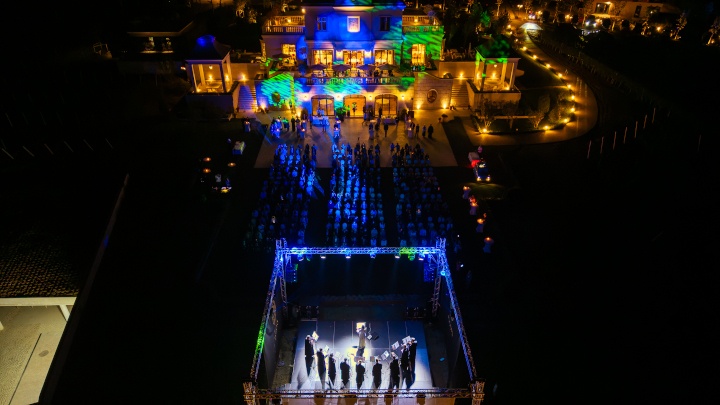
In September 2026, Maria Coman made her Serbian debut with an exclusive concert at La Gora Winery in Irig, in the heart of Fruška Gora. On September 13, her voice filled the unique setting of the winery with a programme rooted in Byzantine and Orthodox spiritual music.
The concert marked an important moment in her artistic journey, bringing her distinctive interpretation of sacred music to Serbian audiences for the first time. Set among the vineyards of Fruška Gora, the evening became a meeting point of music, spirituality, tradition and contemporary cultural life — a fitting expression of Maria Coman’s artistic mission to build bridges between faith, art and the human experience.
Maria, your first concert in Serbia took place at La Gora, on Fruška Gora. How did you experience that moment — singing for a Serbian audience for the first time, in a country that is geographically close to you, yet where you had never performed before?
It was a truly memorable experience. The place was extraordinary, and the people were wonderful. These are not just words; I genuinely felt welcomed, and above all, I consider the experience a blessing from God. Romanians and Serbians are brothers and sisters in Christ, and neighbours by geography. Singing more pieces in Serbian was a challenge, but a joyful one. Both the choir and I felt more connected to the place and to the celebration on September 13.
There is something in your voice that is difficult to explain through music alone. When did you first feel that your voice was not simply an instrument, but a way of conveying something much deeper?
My journey in music began with Byzantine chant, and that was the first moment I felt that God had given me a purpose in life. I actually wanted to become a doctor, but through singing, I discovered another way of bringing healing to people. The tears, prayers, happiness and peace I have witnessed in those who listen to us have made me feel that my voice can be an instrument in God’s hands. I will never have enough words to thank Him for the blessings He has given me.
Before finding the music you sing today, you explored jazz, pop and other musical forms. Did you change your music — or did music change you?
Music has accompanied me since my very first breath. No matter what I studied or what work I did, I always found time during the day to sing, compose or simply listen to music. Every musical genre has taught me something new, and I have rediscovered myself at least a thousand times. Music has made me more flexible, creative and empathetic. It has given me the courage to dream and the faith to believe that, when my conscience is clear and my relationship with God is strong, even the most difficult things are possible.
So yes, I believe music has changed me. As a child, I used to keep my feelings to myself because I was afraid of people, but I always had God as my best friend. Today, I feel closer to the spirit of the Psalmist David, unafraid because I trust in God.
As for whether I changed my music or music changed me, I believe every singer has a unique way of expressing art. In my case, music is not merely an art form; it has a deeply spiritual dimension. Ultimately, I think that is something only the people who listen to me can truly answer.
You have said that Byzantine music must first be lived and felt, and only then sung. What does it mean to you to “live the music”?
For me, it means living in a way that is consistent with what I sing. When it comes to prayers and psalms, I believe we should pray daily, be kind to others and strive to follow the Ten Commandments.
Of course, we are human, and we make mistakes. We should be careful not to judge others, because none of us is without weaknesses. I am no angel; I have my own shortcomings, but I feel an even greater responsibility to work on myself because of the gift I have received.
As the Gospel reminds us, “To whom much is given, much will be required.”
What happens inside you in the few seconds before you begin to sing? Is there stage fright, silence, prayer — or something else?
Before every performance, we pray the Lord’s Prayer. Then comes a moment of silence in which I remind myself why I am there: first, to sing for God and the Virgin Mary, and then for the people. In that silence, I collect myself, shake off my nerves and allow myself to be carried by God’s care. It is a moment in which I try to understand the responsibility of standing on a stage or inside a church and remember that singing is, above all, an offering.
Your music comes from the Orthodox tradition, yet its emotion reaches people who do not necessarily belong to that tradition. Why do you think that is?
I have one answer to this question: the power of the Word. Regardless of language barriers, faith or different mentalities, I believe God will always find a way to reach people’s hearts. The power of His Word, the prayers, the blessing of the Holy Spirit and the people through whom He works can transcend all these differences.
A voice that touches someone, the performer’s emotional expression, or a particular life experience of the listener can offer food for thought. For some people, that moment of connection may even become the beginning of a new life.
Can a person understand a prayer even when they do not understand the language in which it is sung?
Yes, absolutely. I believe we should listen to this music first with the heart and then with the ears.
I have a beautiful story that illustrates this. A friend of mine was travelling in Spain when he visited a small village. He went into a little shop where an elderly man was preparing to close his business and sell it. My friend was surprised to discover that the man was watching a YouTube video of me singing the “Hymn of Love.” He was in tears. My friend told him that he knew me and asked why he was listening to a song whose language he did not understand. The man’s answer was simple: “Because even if I don’t know the words, I KNOW it is the truth.” I try to remember this story whenever I feel low, because I have difficult moments in my own life, too. It reminds me that music can communicate something profound even when words are not understood.
Is there a particular song or psalm that touches you differently every time you sing it, no matter how many times you have performed it?
Yes, Psalm 50 and the “Hymn of Love.” Every time I sing them, I experience repentance differently and discover a new dimension of love.
I hope these two prayers can transcend time and every boundary, continuing to touch people’s hearts, minds and lives. There is something both fascinating and deeply moving about the way these two pieces connect me to my childhood. I was raised in an Orthodox family, and when I was three years old, I became seriously ill quite unexpectedly. By God’s grace, I recovered, and I truly believe that my survival was a miracle.
After my recovery, at the age of three, I began learning Psalm 50 by heart and reading the Hymn of Love from Saint Paul’s First Epistle to the Corinthians whenever I attended the Service of Holy Unction. Today, when I look back, I see these experiences as a bridge across time, connecting the child I once was with the woman and artist I have become.
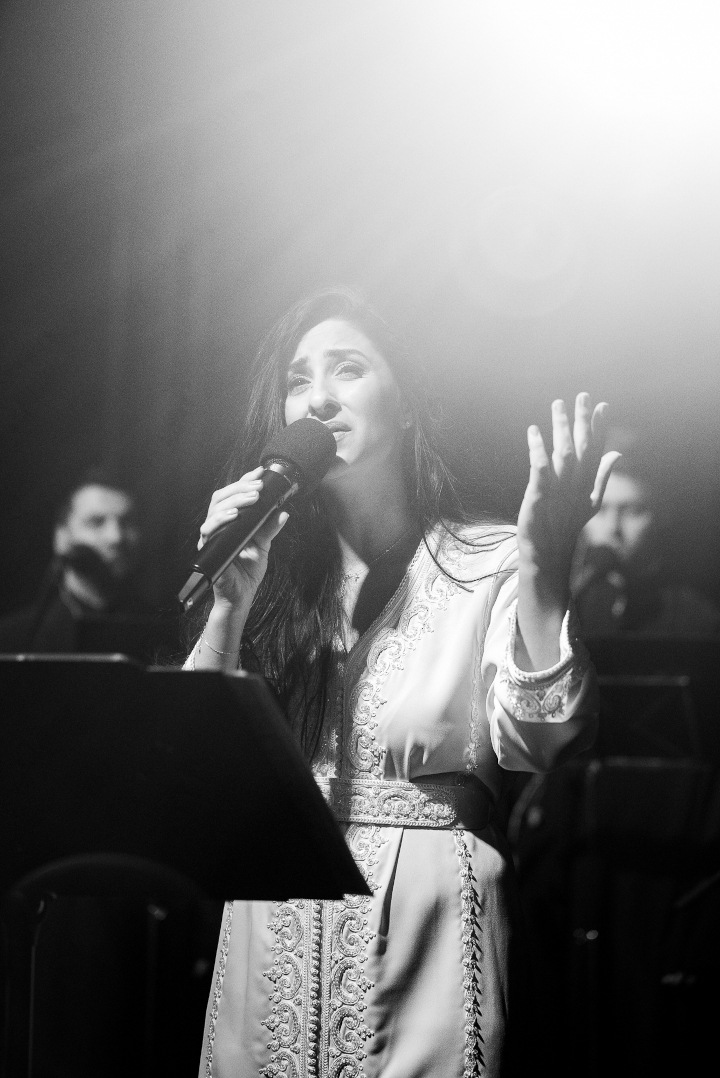
You have had the opportunity to perform on major European stages, from Vienna to Versailles, as well as in sacred spaces. Where have you felt most strongly that your voice had truly found its home?
I would begin by saying that I am deeply grateful for the extraordinary opportunities I have been given to perform in such remarkable places. However, I feel the same responsibility whether I sing for one person or for ten thousand. Every stage and every church has its own unique character, and I am grateful for every experience because each one has become part of my story. I feel blessed and enriched by these experiences, and I hope to share them one day with my children and grandchildren. Ultimately, I believe my voice has truly found its home in every heart that has, even for a second, offered a prayer to God.
What happens when an artist stands before an audience with something as personal as a prayer? Where does art end, and confession begin?
For me, art is confession, especially when your intentions are sincere and you put God first.
When I think about the everyday miracles in life, even the simple gift of waking up each morning, I realise that gratitude itself can become a form of confession. Nothing is truly ours, and tomorrow is never guaranteed. We have the memories of the past and the gift of the present. I try to live each day as if it were my last, without forgetting to enjoy life and praise God whenever I have the opportunity. For me, this is where art and prayer meet: in the awareness of how precious life is and in the desire to offer something meaningful through the gifts we have received.
The theme of RYL Magazine’s October issue is “Self-made Woman.” Would you consider yourself one of them?
I am a God-made Woman, that is for sure. Who I am today is the result of faith, hard work, ambition, perseverance and resilience, along with moments of sorrow and moments of pure happiness. But I have never walked this path alone. My family, my spiritual father and the people who believed in me, supported me and helped me along the way have all been part of this journey. I am grateful for every challenge, because each one has taught me something, and for every person God has placed in my life. I pray that God grants everyone the salvation of their souls and that the Orthodox faith may remain even stronger for generations to come.