
WORDS: MIA MEDAKOVIC
INTERVIEW: ALAA GARAD
PHOTOS: FROM THE PRIVATE ARCHIVE
Dr. Alaa Garad is an Egyptian–British academic, author and practitioner who has spent more than three decades working at the intersection of learning, leadership, and organisational excellence. His journey has taken him from vocational education and banking to university leadership, international consultancy and policy-level work across Europe, the Middle East and Asia.
He currently serves as Pro Vice-Chancellor and Professor of Strategic Learning and Business Excellence at ALM College of Higher Education in Scotland. While a Founding Partner of the Stirling Centre for Strategic Learning and Innovation, he is best known for creating The Learning-Driven Organisation model and for co-authoring The Learning-Driven Business, published by Bloomsbury. What has consistently shaped his work is a belief that learning, when taken seriously, can change organisations, communities, and lives.
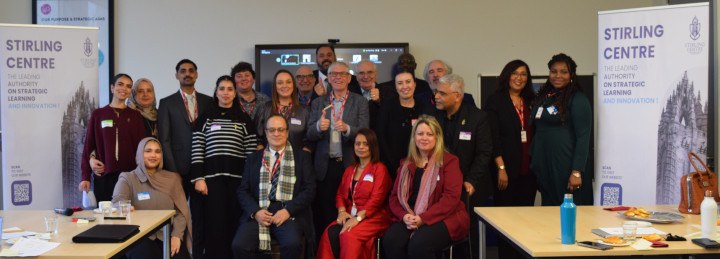
Could you tell us more about the Stirling Centre—its mission, the philosophy behind it and what makes it unique in the field of strategic learning and innovation?
The Stirling Centre was created around a very clear conviction: learning is not a support activity, and it is not a side function. Learning is the engine of strategy, innovation, and long-term relevance.
Our mission is to help leaders, organisations, and societies learn their way forward in a world defined by uncertainty and constant change. Philosophically, we integrate organisational learning, systems thinking, futures and foresight, plus business excellence into one coherent practice. We do not treat these as separate disciplines because, in real life, they are deeply interconnected. What makes the Centre different is that we do not sell training. We design learning ecosystems. Everything we do is rooted in real challenges, real contexts, and real futures. We work with people where strategy actually happens, not where it is written.
Who makes up the heart of the Stirling Centre team and what qualities or expertise do they bring that are essential to the Centre’s work?
The heart of the Stirling Centre is a purpose-driven community rather than a large institutional structure. It is made up of senior academics, experienced practitioners and associates who have worked across sectors, cultures and continents.
What truly connects us is not titles or credentials but a shared mindset. Curiosity, humility, generosity and a deep respect for learning as a human capability sit at the core of our work. This allows us to combine intellectual depth with practical relevance, as well as ambition with integrity.
How do you help organisations turn learning into a real competitive advantage?
Most organisations invest heavily in learning, yet very few see a strategic return on that investment. We start by helping leaders shift how they think about learning. Instead of seeing it as courses, platforms, or content, we reposition learning as capability, culture and strategic intent. Using the Learning-Driven Organisation approach, we explore how learning actually flows through the organisation, where it informs decisions, and where it quietly disappears.
When learning is aligned with strategy and embedded into everyday work, it stops being an expense and becomes a source of agility, innovation, and resilience.
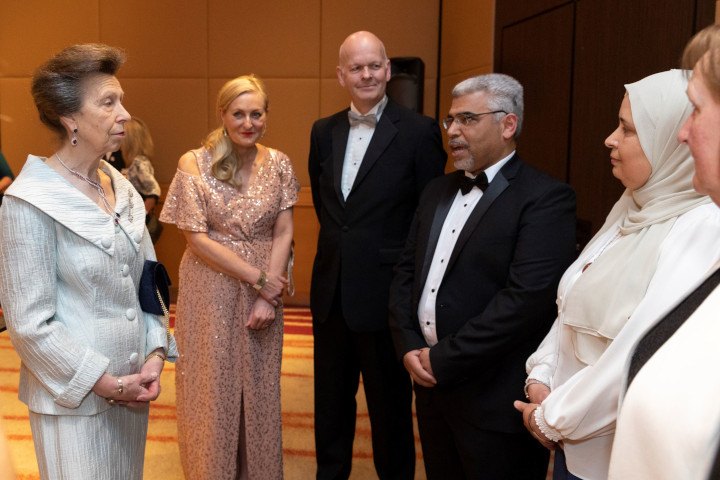
Can you share a memorable success story where strategic learning led to innovation in a company or team?
One experience that stays with me involved a public-sector organisation facing declining performance and very low engagement. Structural change and traditional training had delivered little impact. We worked instead on creating safe spaces for reflection and experimentation, where frontline insights were taken seriously and connected directly to strategic choices, but before that, we got assurance from the Chief Executive that people will not be blamed for voicing up, as we needed to dive deeply to understand where the root cause was. Over time, people began to take risks when they felt they were psychologically safe and there was no fear, and then we started to observe learning across boundaries rather than inside silos.
Innovation followed naturally. Processes improved, services became more responsive, and people rediscovered confidence and ownership. The change did not come from a single breakthrough idea. It emerged because learning was finally allowed to do its work. Dr. Edward Deming, the godfather of quality and learning theories, once said, ‘people do not mind doing their best, but they need to know what to do,’ and we helped people to know what to do.
What are the biggest challenges people face when trying to think and act more strategically?
The first challenge is busyness. People are consumed by operational demands and rarely given space to think. The second is the belief that strategy belongs only to senior leaders. In reality, strategy emerges from how organisations interpret signals, learn from experience and adapt together. The third challenge is unlearning. Letting go of assumptions that once worked but no longer serve is often harder than acquiring new knowledge.
Looking at the future, which trends in learning and innovation excite you the most?
I am encouraged by the growing recognition that learning is a strategic capability rather than an HR activity. I am also excited by the integration of learning with futures and foresight, helping organisations prepare for multiple possible futures rather than a single forecast.
Equally important is the shift from individual learning to collective and organisational learning, especially in complex systems such as governments, universities and large enterprises.
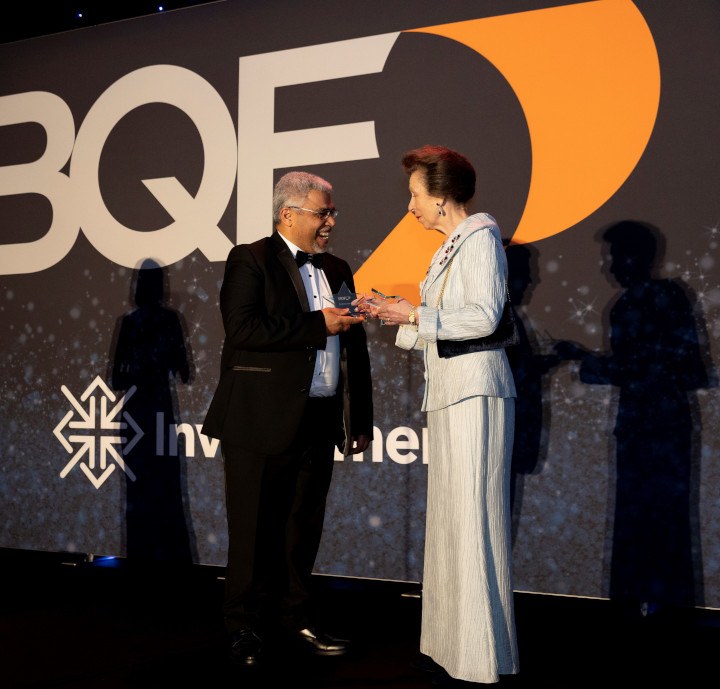
How do you see the role of technology, AI, and digital tools shaping the future of learning and innovation?
Technology and AI in particular offer enormous potential if used with wisdom.
AI can personalise learning, accelerate insight generation and create space for deeper thinking. However, technology must enhance human judgment rather than replace it. Learning still requires reflection, dialogue, ethics and meaning. At the Stirling Centre we see AI as a way to increase learning velocity, not as a shortcut to understanding.
What advice would you give to young professionals who want to become future leaders in strategic thinking?
My first advice is to learn how to learn. The ability to reflect, question assumptions and connect experience matters more than any single technical skill. Second, seek breadth as well as depth. Strategic leaders are to understand systems and relationships, not just functions. Finally, stay grounded. Strategy without values becomes empty. The most effective leaders combine intellectual rigour with humanity.
The topic of the January issue of RYL magazine is “365 new chances”. What is your chance in 2026?
My chance in 2026 is to help more organisations and leaders reclaim learning as a strategic act rather than a compliance requirement. In a fragmented and fast-moving world, I see a powerful opportunity to build learning-driven institutions that are competitive, responsible, reflective and future-fit. For me, 2026 is about scaling impact while staying true to purpose.
As part of this feature, the Stirling Centre for Strategic Learning and Innovation would like to extend a special invitation to RYL readers. We are offering a 50% reduction on membership fees for those who wish to join our growing international learning community.
Readers can use the code RYL when registering or contact Jude directly at Jude@stirlingcentre.org.uk. We warmly invite readers to follow the Stirling Centre on LinkedIn, engage with our work and become part of a community that believes learning is the most powerful strategic advantage of our time.
https://www.linkedin.com/company/stirlinginstitute