TEXT: HANNAH DE GROOT
PHOTOS: FROM THE PRIVATE ARCHIVE, ADRIAN DE GROOT & MIA MEDAKOVIC
The tram slowed to a stop in front of me as the wheels screeched a deep welcome in the late afternoon. The yellowed sun transformed cobblestones of Stari Grad into a treacherous mosaic of polished glass that my heeled boots were ill equipped to handle. It was a rare trip to visit my father in Belgrade, and my initial experience of an anxious study of the ground six inches in front of me was about to become something entirely different. The air carried the savory smoke of grilled ćevapi through an open window of a restaurant; the rich perfume of a smoked pig seemed to rise from the stones themselves.
And yet, it was the most brilliantly peculiar walk of my life.
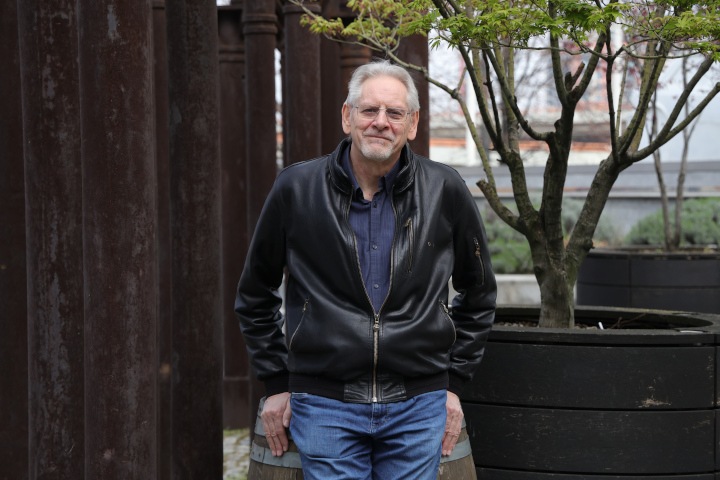
My father, at 75, didn’t just walk; he bounded. He was a 196 centimeter blur of Dutch energy, moving his tall, lanky frame at a startling, quick clip that I could hardly match, even in my late 30s with a respectable 183 centimeters of my own. He never looked down. His head was perpetually upturned, his eyes bright with the delighted concentration of a child finding treasure. He moved with the light, quick eagerness of someone desperate to share a beautiful secret, as if his long legs could not keep up with his energy.
„Look up! Look up!“ he insisted, barely pausing for breath as he pointed toward the sky, beckoning me to follow his gaze while he sped forward.
We had started our walk near Nikola Pašić Square, but this was no ordinary tour. My father was captivated not by monument titles or plaques, but by its margins.
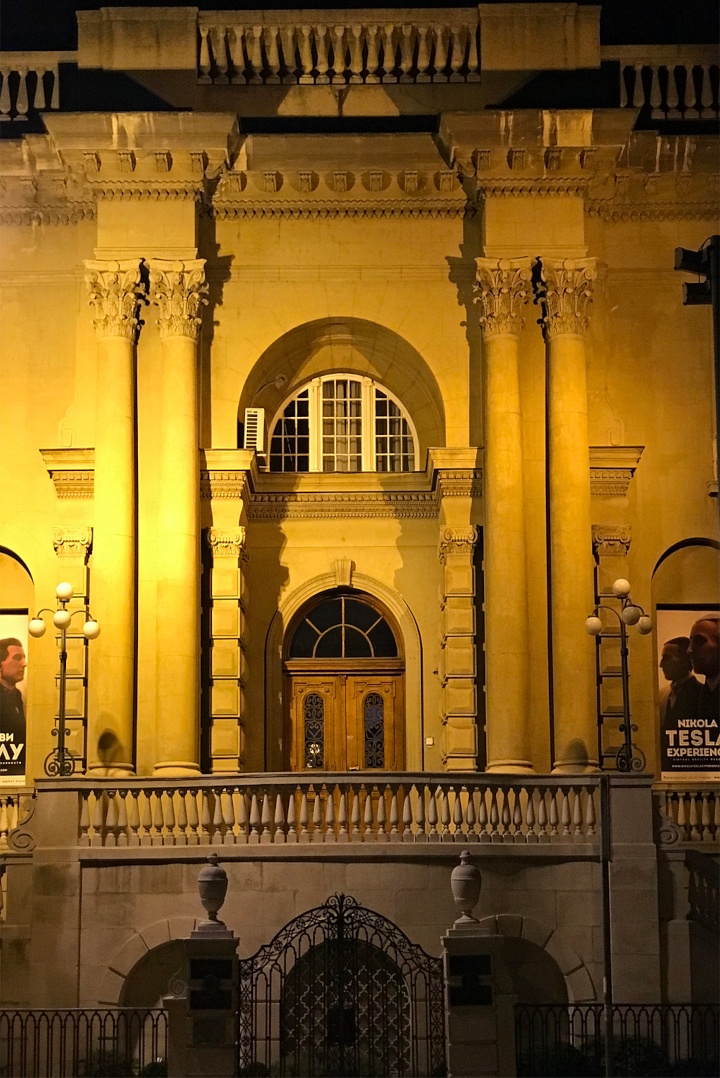
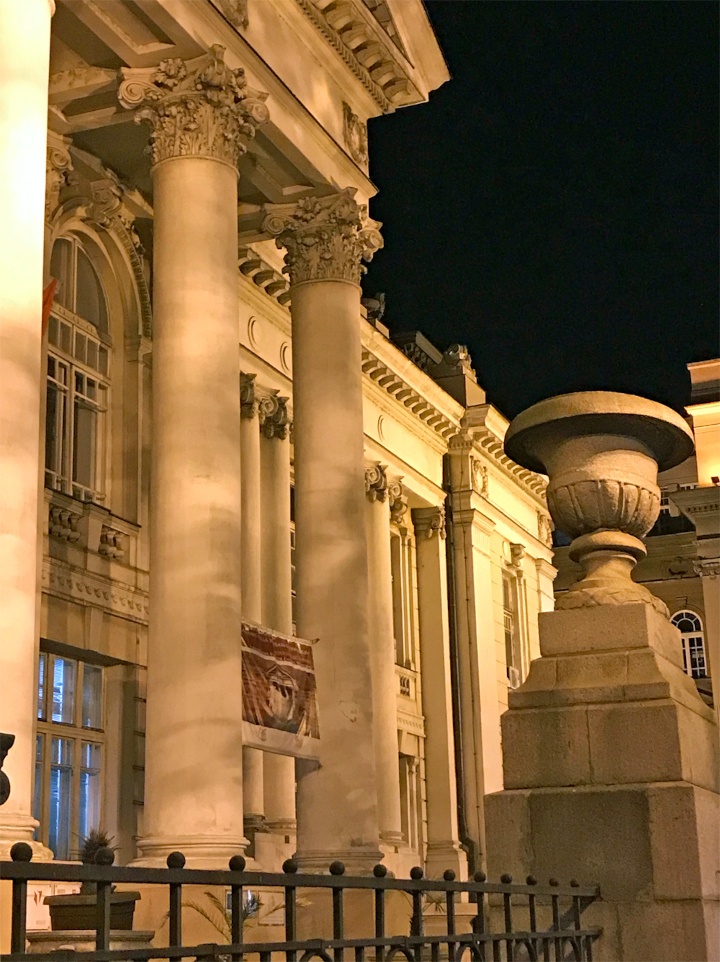
“The history is here, in the cornices,” he declared. I managed a strained glance upward, my neck muscles immediately protesting the command after a long flight from New York. He was already pointing at the top story of a massive century-old building of white stone, covered in a faint gray film of dirt. “See the floral sculptures near the roof? The wrought-iron balconies? Pure beauty. You’ll miss them if you don’t look up.” I looked at them curiously. Above the carved art-nouveau poppies, there were several iron beams bent effortlessly into fleurs-de-lis, with marble women perched above a window, peering down eternally. He then waved dismissively at a glittering storefront at street level selling cheap sequined dresses. “This stuff? Temporary. But up there, that’s the true past.”
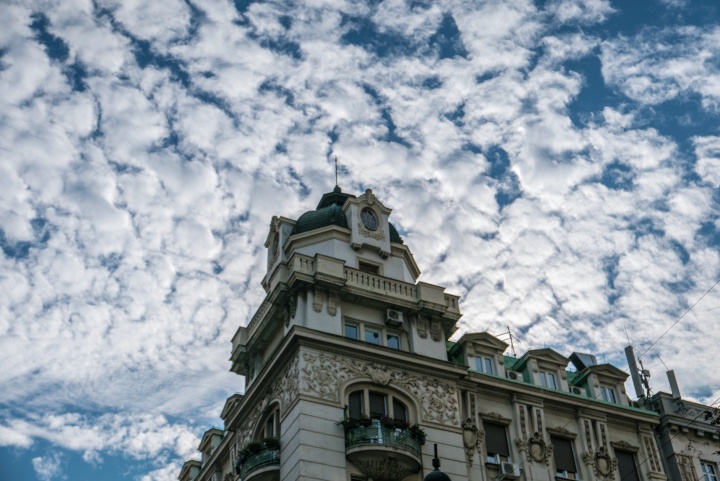
The walk quickly became chaotic; comedic even. We were two human towers moving at high speed, heads tilted back, blind to the immediate world. I stumbled, catching myself headfirst into a lamppost, and my father, focused on magnificent neo-Baroque angels adorning a roof, almost clotheslined a woman carrying groceries. Down below, pedestrians scurried with their eyes on the ground or their phones. A few watched us zigzag past with bemused expressions. One or two even lifted their gazes skyward as we passed, as if catching a contagious curiosity.
My father pressed on, narrating the city’s details as though reading Braille written in stone. He spoke of the significance of shifting profiles in moldings, revealing the layers of floors separating eras of construction styles, the frayed beams and faint pockmarks, small scars from wars, bullets, and bombings, still visible if you knew how to look.

Somewhere along the route, without ever discussing it, the shape of the walk changed. I found myself lifting my chin more readily, letting the buildings announce themselves from their highest edges. I didn’t even know the names of the buildings, and my father had stopped announcing them. Instead, I followed his long, buoyant stride and the invisible thread of his enthusiasm.
We eventually reached a small square. He stopped at last, completely fresh, a brilliant twinkle in his eye, his enthusiasm undiminished. I was winded, slightly sore, and absolutely captivated.
„See?“ he said softly. „The best details are always the ones everyone else overlooks. You have to climb with your eyes to find them.“
As he said this, a gust of evening air lifted the dust along the stones, and I watched it swirl upward, my gaze rising, following the line of a balcony up toward a pale, fading patch of orange blush sky. The walk had left me disoriented, unsure of where exactly I’d been, but suddenly very certain of what I’d been shown.
Somewhere above the streets of Belgrade, my father was still looking up, and now, finally, I was too.